
Student KitLow stock
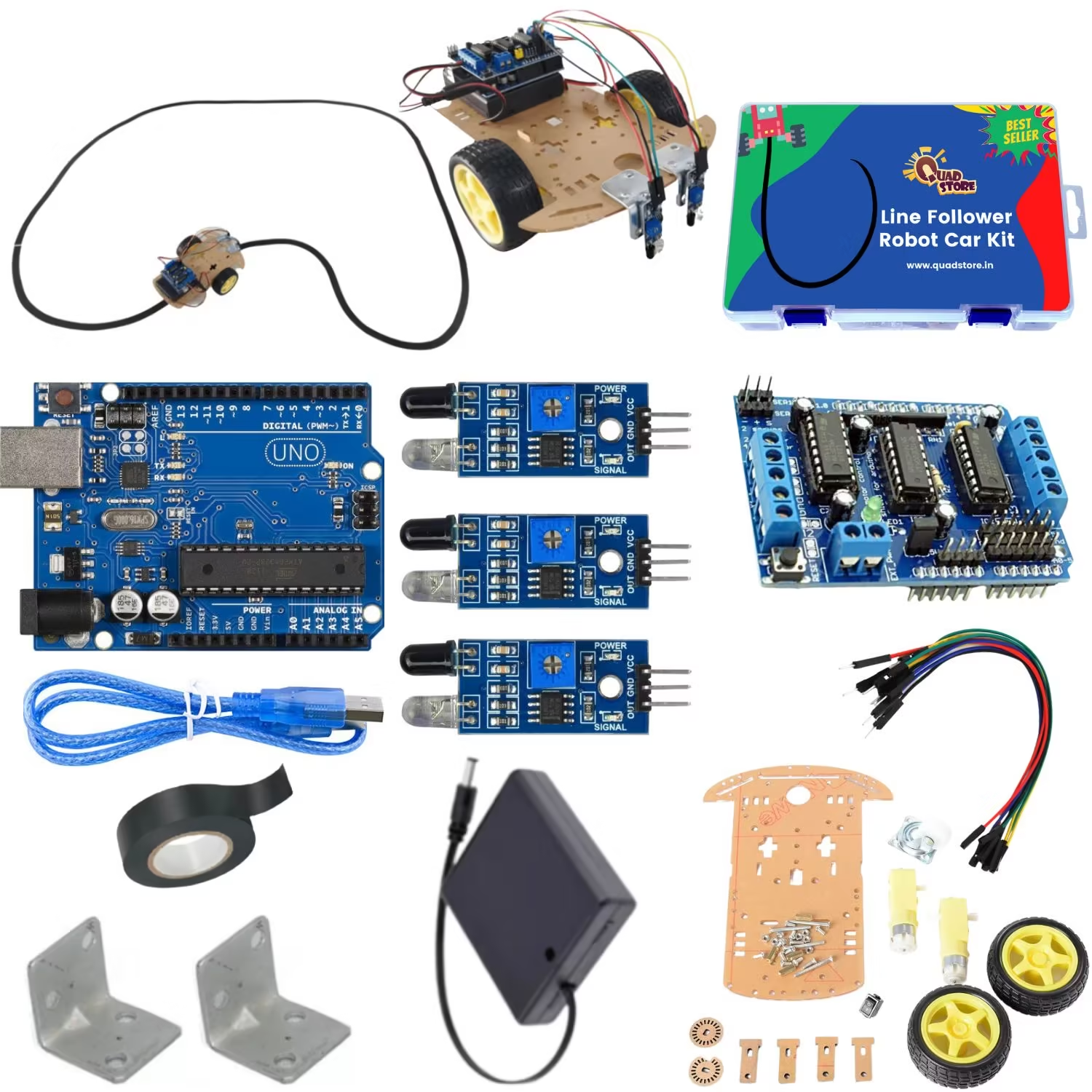
Line-Follower Robot Kit
2WD with caster
₹1,899
Line-follower and obstacle-avoider robot kits, motor drivers, ultrasonic and IR sensors for students and makers. Tracked delivery across India.
5 products
2WD with caster
2cm – 4m
2 – 30cm
2
up to 2m
BUYING GUIDE
Most student robots start as a two-wheel chassis, a motor driver and a handful of sensors. A line-follower kit is the classic first build: it teaches motor control, sensor reading and a simple feedback loop, and it is the entry point for most college robotics competitions. If you already have an Arduino, buy the chassis and driver separately; if you are starting from zero, a complete kit saves you from missing parts.
The HC-SR04 ultrasonic sensor is the cheapest way to measure distance (2 cm to 4 m) and works for most rovers. IR sensors are better for short-range edge and line detection. When you need millimetre accuracy in tight spaces, a VL53L0X time-of-flight sensor over I²C is worth the extra cost. Our guide on choosing an obstacle sensor compares all three.
A microcontroller pin cannot drive a motor directly. The L298N dual H-bridge handles two DC motors at up to 2 A per channel and is the standard choice for small rovers. Power the motors from a separate battery pack and share ground with the board to avoid random resets.
LEARN
Speed, memory, Wi-Fi, voltage and price compared side by side — and a simple rule for choosing the right board for your first project.
ReadRead a DHT11 sensor with an ESP32 and show the temperature on your phone over Wi-Fi — a complete beginner project with wiring and code.
ReadHC-SR04, IR modules and the VL53L0X compared on range, accuracy, price and pitfalls — so you pick the right obstacle sensor for your robot.
Read